How often should you get a teeth whitening done safely?
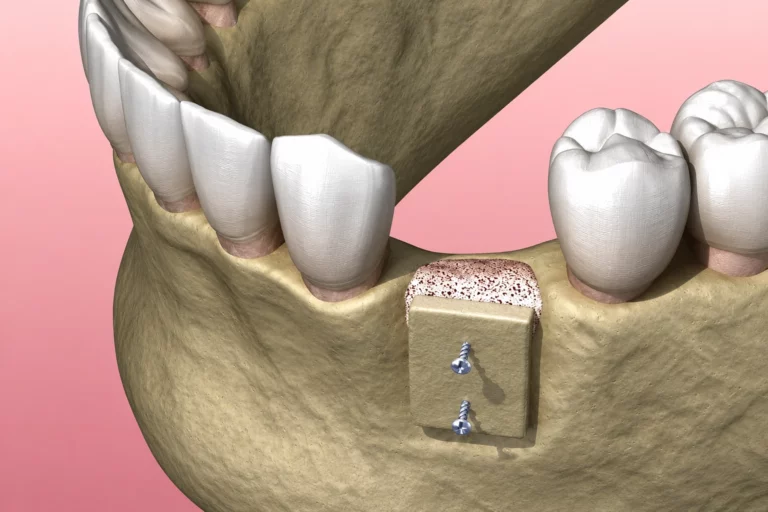
Losing one or several teeth changes anyone’s life. It not only affects the way you chew or enjoy food, but it also damages your confidence when smiling. For that reason, dental implants are the best option to restore normalcy. However, many patients face an unexpected obstacle at their first appointment: “You don’t have enough bone to hold the implant.” If you have received this diagnosis, don’t worry. Modern dentistry offers advanced solutions to recover lost volume. One of the most reliable and predictable techniques is the block bone graft. When you spend a long time without a tooth, the bone of the mandible or maxilla shrinks and becomes too thin or short (what we call bone atrophy). Imagine the dental implant is like a screw that must hold a heavy picture; if the wall is as thin as paper, the screw will fall out. The block bone graft is, literally, the reconstruction of that “wall.” It consists of placing a small rigid fragment of bone tissue in the weakened area to increase its thickness and height. This block is fixed with millimetric precision and securely using special mini fixation screws. After a few months (usually between 4 and 6 months), your own body integrates this block, turning it into your own bone — strong and completely natural. Once fused, the area will have the solid base the surgeon needs to place your dental implants with a full guarantee of success and durability.
Everything you need to know about the treatment
Every mouth is unique. For that reason, the essential first step is to carry out a three-dimensional radiographic study (dental CT scan) to evaluate your case in a personalized way. Our technology at the service of your well-being — Guided surgery and 3D printing: Millimetric precision. Forget about freehand surgeries. Using a high-resolution dental CT scan and an intraoral scanner, we create a digital clone of your mouth. With this data, we manufacture a personalized surgical guide through 3D printing. This template fits perfectly on your gums and tells us the exact point where the graft should be placed. The result? Shorter surgeries, minimal incisions, and zero margin for error.
Where does the bone block come from?
In general, the most effective and safe material is autogenous bone — that is, the patient’s own bone. It is usually taken from another area of the mouth where there is excess tissue, such as the back of the mandible or the chin. Because it is your own DNA, the risk of rejection is zero and regeneration is much faster and of better quality. In certain specific cases, external biomaterials of safe and certified origin may also be considered.
Plasma Rich in Growth Factors (PRGF): Express healing
We are experts in advanced tissue regeneration. On the day of the procedure, we draw a small amount of blood from the patient (similar to a common blood test) and centrifuge it in our facilities. The plasma obtained contains the proteins responsible for your body’s natural regeneration. By applying it to the block graft we achieve:
•Accelerated healing of the gum and bone integration. •Minimized inflammation and postoperative pain. •Minimized risk of infection or rejection.
When is this procedure indicated?
Our specialists recommend the block graft in complex situations such as:
• Severe bone loss in width: When the bone is too thin.
• Combined defects: Lack of bone in both thickness and height.
• Aftermath of infections or trauma: Cases where an accident or advanced periodontal disease destroyed the dental support.
Does the procedure hurt?
This is our patients’ biggest concern, and the answer is a resounding no. The surgery is performed under local anesthesia, so you won’t feel anything during the process. In addition, our clinic offers the option of conscious sedation, a state of deep relaxation ideal for patients who are afraid of the dentist.
Pain-free and with conscious sedation
We know that the word “surgery” can be intimidating. That is why, in addition to using the latest generation local anesthesia, we offer you our conscious sedation service. An anesthesiologist will induce a state of maximum relaxation and well-being where you will remain awake, but completely unaware of any discomfort or stress.
The postoperative period is very manageable with the medication (pain relievers and anti-inflammatories) that the surgeon will prescribe. It is normal to experience some swelling during the first week, but you can resume your normal life following a few basic care instructions:
•Apply local cold during the first few hours.
•Maintain a soft and lukewarm diet.
•Avoid tobacco and alcohol, as they delay healing.
The future of your smile starts today
Severe bone loss is no longer an insurmountable barrier. Thanks to the digitalization of dentistry, we can restore a strong, healthy bone structure ready to support your new dental implants with full durability. Every case requires a custom digital map. We invite you to schedule an initial diagnostic consultation at our facilities for your 3D study with no obligation. Contact us through our clinic’s website or call us directly. The technology is ready to give you back your smile!